
Summer construction zones in Atlanta, GA can increase car accident risks because drivers must react to lane shifts, reduced shoulders, sudden slowdowns, construction vehicles, and changing traffic patterns. These hazards become more common during warmer months when road crews repair, repave, and improve highways, ramps, and busy surface streets. A work zone crash may involve more than one responsible party, including negligent drivers, commercial vehicles, contractors, or government entities. Gunnels Law Firm, LLC helps injured people understand what evidence matters, how fault may be evaluated, and what steps can protect a Georgia car accident claim.



Why Summer Roadwork Can Make Atlanta Driving More Dangerous 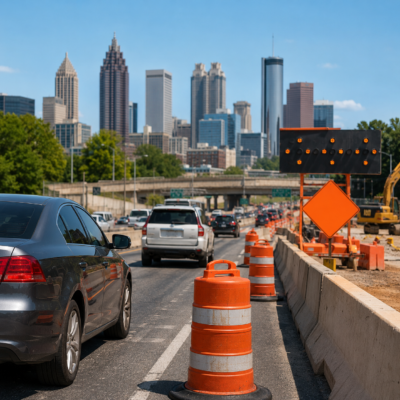
Atlanta drivers already deal with dense traffic, interstate merges, fast-moving commuters, and frequent congestion on I-75, I-85, I-285, GA-400, and major local roads. During summer, construction activity often adds another layer of risk. Warmer weather gives crews more opportunity to complete paving, bridge work, utility repairs, and lane improvements. It also overlaps with vacation travel, weekend events, and heavier traffic near busy corridors.
A construction zone changes the rules of the road quickly. A lane that was open yesterday may be closed today. A ramp may be narrowed. Temporary signs may redirect traffic through unfamiliar paths. Drivers who are distracted, impatient, or following too closely may not have enough time to react.
Common work zone hazards include:
Lane closures that force sudden merging
Narrow lanes with less room for error
Reduced shoulders or no safe escape area
Temporary pavement changes
Loose gravel, uneven lanes, or debris
Construction trucks entering or exiting traffic
Reduced visibility from barriers or equipment
Stop-and-go backups near work crews
These conditions do not automatically mean someone is legally responsible for a crash. They do mean the investigation should look closely at how the work zone was designed, how drivers behaved, and whether warnings were clear enough for the conditions.
I had the pleasure of working against Chris on a fairly complicated case. Chris was professional during the course of litigation, and undoubtedly maintained his clients’ interests as the primary focus throughout. Due to Chris’ efficiency and advocacy for his clients, we were able to resolve the case for a reasonable amount, without spending unnecessary time and expenses. I hope to have more cases with Chris in the future, and would have no hesitation recommending Chris to handle complex personal injury matters.” - Paul T.
How Construction Zones Cause Rear-End Collisions
Rear-end crashes are common in Atlanta work zones because traffic can slow without much warning. A driver may enter a construction area at highway speed, then encounter stopped traffic around a curve, near a ramp, or behind a barrier.
These crashes often happen when a driver:
Follows too closely
Looks at a phone or navigation screen
Fails to slow for warning signs
Speeds through a reduced-speed zone
Changes lanes aggressively
Does not leave extra space for large trucks
A rear driver is often blamed, but fault is not always that simple. A multi-vehicle crash may involve several drivers. A sudden unsafe lane change, missing warning sign, poorly marked closure, or debris in the roadway may also matter.
Someone injured in this type of crash should preserve evidence quickly. Photos of the vehicles, cones, signs, lane markings, skid marks, and traffic layout can be valuable. If injuries prevent a person from taking photos, a family member or investigator may be able to help later.
Dealing with Insurance Steps to File a LawsuitRelated Videos
Lane Shifts and Sideswipe Accidents
Construction zones often require drivers to move through temporary lane shifts. These shifts can be confusing, especially at night, during heavy rain, or in areas where traffic is already moving too fast. In Atlanta, tight work zones near interchanges can be especially difficult because drivers may be merging, exiting, and reacting to construction signs at the same time.
Sideswipe crashes may occur when:
A driver drifts across temporary lane lines
A vehicle enters a narrowed lane too quickly
A truck needs more room than the lane allows
A driver cuts into traffic near a closed lane
Temporary markings conflict with old lane markings
Evidence is key in these cases. Insurance companies may claim both drivers simply failed to stay in their lanes. A careful review may show that one driver ignored signs, changed lanes unsafely, or failed to yield. In some cases, the design of the work zone may also be reviewed.
When Construction Vehicles Create Additional Risk
Work zones may include dump trucks, paving machines, loaders, utility vehicles, and traffic control vehicles. These vehicles move differently than regular traffic. They may enter the road from a closed lane, stop unexpectedly, or back into a work area.
A crash involving a construction vehicle can raise questions about:
Whether the vehicle had proper warning lights
Whether a flagger or spotter should have been used
Whether the vehicle entered traffic safely
Whether the operator followed safety procedures
Whether the company trained the operator properly
Whether the vehicle was properly maintained
These cases may involve commercial insurance policies, employer responsibility, contractor records, and maintenance logs. A person injured in this type of crash may benefit from speaking with an Atlanta car accident attorney before giving a recorded statement to an insurance company.
You can learn more about related auto injury claims here: https://gunnelslaw.com/atlanta-car-accident-attorney/
Why Speeding Is Especially Dangerous in Work Zones
Speed limits are often reduced in construction zones because drivers need more time to process signs, lane shifts, workers, equipment, and stopped traffic. Even a small increase in speed can reduce reaction time and increase crash force.
In a work zone, speeding can lead to:
Hard-braking chain reaction crashes
Loss of control near barriers
Failure to merge safely
More severe injuries in rear-end collisions
Greater danger to road workers and drivers
A speeding driver may be held responsible if their conduct caused or contributed to the crash. Georgia’s comparative fault rules may also apply when more than one person shares blame. Under Georgia law, an injured person’s recovery can be reduced by their percentage of fault, and a person who is 50 percent or more at fault generally cannot recover damages from another at-fault party.
This makes fault disputes very important. Insurance adjusters may look for ways to shift blame, especially in complicated work zone crashes.
What Evidence Helps After an Atlanta Construction Zone Crash
Work zone crash evidence can disappear quickly. Cones move. Signs change. Crews finish projects. Skid marks fade. Surveillance or traffic camera footage may be overwritten. That is why fast evidence collection matters.
Helpful evidence may include:
Police crash reports
Photos and videos from the scene
Dashcam footage
Witness names and contact information
Construction zone signage photos
Traffic camera footage
911 records
Medical records
Vehicle damage photos
Contractor or maintenance records
Cell phone records, when distraction is suspected
If the crash happened near an active project, it may be necessary to identify the agency, contractor, subcontractor, or traffic control company involved. This does not mean every work zone crash involves contractor negligence. It means the full picture should be reviewed before accepting an insurance company’s version of events.
For more information on preserving proof, visit: https://gunnelslaw.com/collecting-evidence-in-a-car-accident-claim/
Common Injuries After Work Zone Car Accidents
Construction zone crashes can cause serious injuries because vehicles may collide near concrete barriers, construction equipment, uneven pavement, or stopped traffic. Even lower-speed crashes can cause painful injuries that disrupt work, sleep, and daily life.
Common injuries include:
Whiplash and soft tissue injuries
Back and neck injuries
Concussions
Broken bones
Shoulder, knee, and wrist injuries
Cuts from broken glass or debris
Aggravation of prior medical conditions
Emotional distress after a frightening crash
Getting medical care soon after the crash is one of the most practical steps an injured person can take. Medical records help connect injuries to the collision. Delays in care may give an insurance company room to argue that the injuries were not related or were not serious.
Who May Be Responsible for a Construction Zone Accident?
Responsibility depends on the facts. In many cases, another driver is the main at-fault party. In other cases, liability may involve several people or companies.
Possible responsible parties may include:
A speeding or distracted driver
A commercial truck driver
A construction vehicle operator
A contractor responsible for traffic control
A subcontractor responsible for signs or barriers
A government entity responsible for the roadway
A company responsible for vehicle maintenance
Claims involving public entities can involve special notice rules and shorter deadlines than ordinary injury claims. Because these rules can be strict, people injured in a work zone should avoid waiting to get legal guidance.
You can review broader injury claim information here: https://gunnelslaw.com/atlanta-personal-injury-attorney/
How Insurance Companies May Respond
Insurance companies may treat construction zone crashes as complicated claims. They may argue that traffic patterns were confusing for everyone, that the injured person should have slowed down sooner, or that another driver caused the crash. If several vehicles were involved, each insurer may try to place blame elsewhere.
Before accepting a settlement, an injured person should understand the full scope of damages. These may include medical bills, future care needs, lost income, reduced earning ability, pain and suffering, vehicle damage, and out-of-pocket expenses.
A quick settlement may not account for ongoing treatment, missed work, or symptoms that become clearer after the first few weeks. This is one reason documentation matters. Keep medical bills, repair estimates, prescription receipts, mileage logs, and work absence records.
For more about claim value, visit: https://gunnelslaw.com/car-accident-case-value/
What To Do After a Summer Construction Zone Crash in Atlanta
After a crash, safety comes first. Move out of traffic if you can do so safely, call 911, and seek medical attention. If possible, document the work zone before it changes.
Useful steps include:
Call law enforcement and request a report
Get medical care, even if symptoms seem minor
Take photos of vehicles, signs, cones, lanes, and road conditions
Collect witness contact information
Avoid admitting fault at the scene
Notify your insurance company with basic facts
Do not give a recorded statement to the other driver’s insurer without legal advice
Keep all medical and expense records
Work zone crashes often require a closer look than a standard fender bender. The sooner evidence is preserved, the stronger the claim may be.
When Legal Help May Be Useful
Not every crash requires an attorney. Legal help may be useful when injuries are serious, fault is disputed, multiple vehicles are involved, a commercial vehicle was part of the crash, or a construction company may share responsibility.
An attorney can help by investigating the crash, reviewing insurance coverage, identifying responsible parties, preserving evidence, calculating damages, and handling communications with insurance companies. This allows the injured person to focus on treatment and recovery.
Gunnels Law Firm, LLC provides legal guidance for injured people in Atlanta, GA and across Georgia. The firm offers free consultations and helps clients understand their options after car accidents, including crashes in construction zones.
To contact the firm, visit: https://gunnelslaw.com/contact-us/
Speak With an Atlanta Car Accident Attorney
A summer construction zone crash can leave you dealing with pain, medical appointments, missed work, and confusing insurance calls. You do not have to sort through those issues alone. Gunnels Law Firm, LLC can review what happened, explain your options, and help you take the next step with confidence.
This article is for informational purposes only and is not legal advice. Consult an attorney about your specific situation.