The holidays are a time of joy, but they also bring about increased traffic on Georgia’s roads. This can lead to accidents, including multi-vehicle pileups. If you’re involved in a chain-reaction accident, understanding how Georgia law handles liability can make a significant difference in your legal journey. This guide dives into how the state’s comparative negligence rule impacts multi-vehicle crashes, how insurance claims are handled, and what steps you should take if you’re caught in a holiday pileup.


Understanding Multi-Vehicle Pileups in Georgia 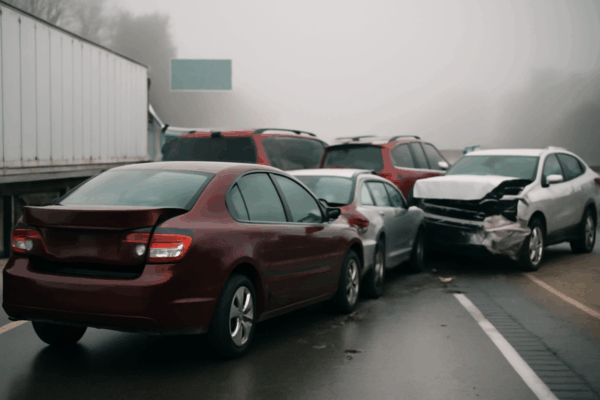
Each year, Georgia witnesses a surge in traffic accidents over the holiday season. The combination of bad weather, crowded highways, and distracted drivers increases the chances of incidents involving multiple vehicles. In these accidents, one crash can quickly lead to a series of collisions, making it challenging to determine fault and liability.
Multi-vehicle accidents, or chain-reaction crashes, occur when one vehicle collides with another, and the impact sets off a sequence of collisions. These types of accidents can involve several cars and often result in significant property damage, injury, or even fatalities. The complexity of these crashes lies in the challenge of determining who is responsible for the damages.
What is a Chain-Reaction Accident?
In the context of a chain-reaction accident, one vehicle’s initial collision triggers additional crashes. For instance, if a driver rear-ends another car, the impact could push the struck vehicle into a third vehicle, and so on. The risk in these accidents is not only physical but also legal, as more than one party could be found at fault.
When a chain-reaction accident occurs, the number of vehicles involved can make the process of assigning blame complicated. If the first collision is caused by one party’s negligence, that individual could be fully or partially responsible for subsequent crashes. However, other drivers involved might also share the blame, depending on their actions during the incident. For example, a driver who fails to react appropriately to a crash ahead of them could also be found liable for damages.



Georgia’s Comparative Negligence Rule: What Does It Mean for You?
Georgia follows a comparative negligence rule when it comes to personal injury claims, including those arising from multi-vehicle accidents. This means that the fault for an accident is not solely placed on one party but is distributed among all parties involved, based on their level of responsibility.
Under Georgia’s comparative negligence law, if you are found partially at fault for the accident, your compensation will be reduced according to your percentage of fault. For instance, if you’re 20% at fault for a chain-reaction pileup, and the total damages amount to $100,000, your compensation will be reduced by 20%, leaving you with $80,000.
This system allows for fairness, ensuring that each party is held accountable for their role in the accident. However, it can also complicate claims because multiple drivers may share fault, making it essential to carefully investigate the circumstances surrounding the crash.
Determining Fault in Multi-Vehicle Pileups: The Investigation Process
When a multi-vehicle pileup occurs, determining fault requires a thorough investigation. Police officers typically respond to the scene and document the details, which become part of the official report. The investigation will examine:
- Evidence at the scene: Including skid marks, vehicle positions, and the extent of damage.
- Witness testimony: Eyewitnesses who saw the crash unfold can provide vital information.
- Driver statements: Each driver’s account of the event, which helps authorities understand how the accident occurred.
- Surveillance footage: If available, footage from traffic cameras or nearby businesses can provide crucial evidence.
All these factors are considered to determine which drivers were negligent and to what extent. In cases of multi-vehicle pileups, understanding how each vehicle was involved can be challenging. A crash that starts as a minor fender-bender could escalate, with injuries and damages increasing as more cars get involved.
I had the pleasure of working against Chris on a fairly complicated case. Chris was professional during the course of litigation, and undoubtedly maintained his clients’ interests as the primary focus throughout. Due to Chris’ efficiency and advocacy for his clients, we were able to resolve the case for a reasonable amount, without spending unnecessary time and expenses. I hope to have more cases with Chris in the future, and would have no hesitation recommending Chris to handle complex personal injury matters.” - Paul T.
What Should You Do After a Multi-Vehicle Pileup?
If you’re involved in a multi-vehicle pileup, taking immediate and careful steps is essential to protect yourself legally and physically. Here’s what you should do:
- Ensure safety and seek medical attention: If anyone is injured, call for emergency services immediately. Even if you don’t think you’re hurt, it’s essential to get checked out, as some injuries may not be immediately apparent.
- Call the police: A police report is vital for documenting the incident and proving liability. Always file a report, even if the damage seems minor.
- Gather evidence: Take photographs of the scene, including all vehicles involved, any road conditions, traffic signs, and any visible damages. Also, try to collect contact information from witnesses.
- Avoid admitting fault: While it’s important to cooperate with law enforcement, never admit fault at the scene. Let the investigation and insurance process determine liability.
- Notify your insurance company: Promptly report the accident to your insurer. Be clear about the facts and avoid speculation about who was at fault.
How Insurance Claims Work in Multi-Vehicle Pileups
In a multi-vehicle crash, insurance companies will often conduct their own investigations to determine liability. The claims process can become more complicated with more vehicles involved, as each insurance company will try to protect its own interests.
Georgia law requires drivers to carry certain types of insurance, such as liability insurance. However, if you’re involved in a multi-vehicle accident, the damages may exceed the limits of a single driver’s insurance policy. This is where your uninsured or underinsured motorist coverage may come into play. If the responsible driver does not have enough coverage to pay for your damages, your own insurance can help cover the gap.
Dealing with Insurance Steps to File a LawsuitRelated Videos
The goal during the claims process is to establish the degree of fault for each driver and calculate the damages accordingly. This is where the experience of a personal injury attorney can prove invaluable. An attorney can help you navigate the complexities of insurance negotiations and ensure that you’re not unfairly burdened with fault.
The Role of Legal Representation in Multi-Vehicle Accident Cases
While it may seem like the insurance companies and police will sort everything out, the reality is that multi-vehicle pileups often result in lengthy disputes over liability. Insurance companies may try to reduce payouts, and multiple drivers may dispute the degree of their fault. Having an experienced attorney on your side ensures that your rights are protected.
An attorney can:
- Advocate for fair compensation: If the insurance companies fail to offer a fair settlement, your attorney can help you pursue the full amount of compensation you’re entitled to, including medical expenses, lost wages, pain and suffering, and more.
- Investigate thoroughly: A lawyer can gather evidence, interview witnesses, and work with experts to build a strong case.
- Negotiate with insurers: Insurers may try to downplay your role in the crash or undervalue your claim. Your attorney will negotiate on your behalf, ensuring that you receive the compensation you deserve.
- Litigate in court: If a fair settlement cannot be reached, your attorney can represent you in court, fighting for the best possible outcome.
Being involved in a multi-vehicle pileup, especially over the holidays, can be an overwhelming experience. However, understanding Georgia’s laws regarding chain-reaction accidents and liability can help you navigate the aftermath more effectively.
If you find yourself in such a situation, it’s crucial to take immediate steps to protect your health and legal rights. Contacting a skilled attorney from Gunnels Law Firm, LLC can ensure that your case is handled with the care and attention it deserves. With legal representation, you can focus on your recovery while your lawyer works tirelessly to secure the compensation you are owed.