
When road debris causes a Georgia car accident, liability depends on where the debris came from, who created the hazard, and whether a person or company failed to use reasonable care. Gunnels Law Firm, LLC helps injured people in Atlanta, Georgia, and nearby areas investigate crashes involving unsecured cargo, vehicle parts, construction materials, and other roadway hazards.
Depending on the facts, responsibility may involve a driver, employer, trucking company, cargo-loading company, maintenance provider, repair shop, manufacturer, contractor, property owner, or government entity. Because debris can be removed quickly and the responsible vehicle may leave the scene, photographs, video, witness information, police reports, cargo records, and vehicle records can become key evidence.





Why Road Debris Accidents Can Be Hard to Investigate 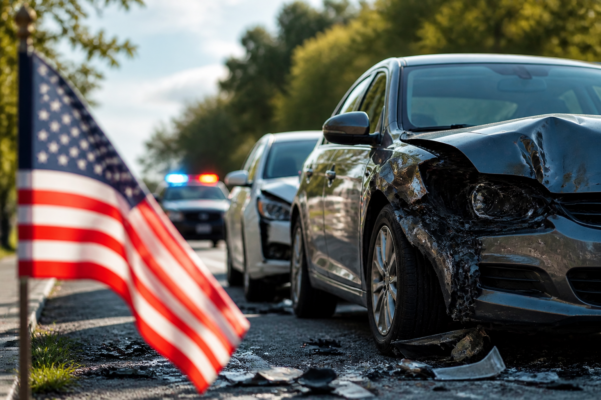
Road debris accidents often happen in seconds. A ladder can slide from a pickup truck. A tire tread can separate from a commercial vehicle. Construction materials can spill into a travel lane. A driver can strike an object directly or swerve to avoid it and collide with another vehicle.
The main challenge is often proving where the debris came from and who controlled it. In a standard two-vehicle collision, the drivers and vehicles are usually still at the scene. In a debris case, the person who created the hazard may continue driving without realizing that cargo or a vehicle part entered the roadway.
That makes early investigation valuable. Debris may be moved by another motorist, road crew, tow operator, or law enforcement officer. Nearby video may be overwritten. Witnesses may become difficult to locate. You should not enter an active traffic lane to retrieve an object, but photographs or video taken from a safe location can help document what caused the crash.
Learn more about Georgia car accident claims at https://gunnelslaw.com/atlanta-car-accident-lawyer/.
Road debris cases can turn on evidence that disappears within hours. Preserving video, witness information, and vehicle records early can help establish how the hazard reached the roadway.
A Driver Who Failed to Secure Cargo May Be Liable
Georgia law requires vehicle loads to be secured so they do not drop, escape, shift, or become a hazard to other road users. O.C.G.A. §§ 40-6-248.1 and 40-6-254 address load securement on Georgia roads.
When furniture, tools, lumber, appliances, landscaping equipment, ladders, or other materials fall from a vehicle because the load was not properly secured, the driver may be liable if the failure to secure the load caused the collision and resulting injuries.
A road debris claim may examine questions such as:
- Was the cargo tied down or otherwise restrained?
• Was the vehicle overloaded?
• Were straps, chains, tarps, or other securement devices appropriate for the load?
• Did the driver inspect the load before entering the roadway?
• Did the driver have reason to know that the load had shifted?
• Was the vehicle or trailer suitable for transporting the item?
The presence of an object in the road does not automatically establish who is legally responsible. Evidence still must connect the hazard to the person or company whose conduct caused or contributed to the crash.



Employers, Trucking Companies, and Cargo Loaders May Share Responsibility
Commercial road debris accidents can involve more than one potentially responsible party. If an employee was acting within the scope of employment when negligent driving or cargo handling caused the crash, the employer may face responsibility under Georgia law.
A trucking company may also face direct claims when evidence shows that deficient training, inspection, maintenance, or cargo-securement practices contributed to the accident.
A warehouse, shipper, loading contractor, or other company may also become part of the investigation if its workers loaded or secured the cargo. Georgia law can impose duties on people who assist with loading a vehicle for operation on a public road. The specific facts still control whether a loader’s conduct caused the road hazard and resulting injuries.
Useful commercial records may include:
- Dispatch records
• Bills of lading
• Load manifests
• Cargo photographs
• Inspection records
• Maintenance records
• Driver logs
• Electronic vehicle data
• Company safety policies
• Records showing who loaded, secured, or inspected the cargo
Some electronic and business records are not kept indefinitely. Early preservation requests can help prevent relevant evidence from being lost through routine deletion or disposal.
I had the pleasure of working against Chris on a fairly complicated case. Chris was professional during the course of litigation, and undoubtedly maintained his clients’ interests as the primary focus throughout. Due to Chris’ efficiency and advocacy for his clients, we were able to resolve the case for a reasonable amount, without spending unnecessary time and expenses. I hope to have more cases with Chris in the future, and would have no hesitation recommending Chris to handle complex personal injury matters.” - Paul T.
Mechanical Failure Can Create Road Debris
Road debris can come from a failed vehicle component rather than unsecured cargo. A tire can separate. A wheel can detach. A trailer hitch can fail. A damaged or poorly maintained component can break free and enter another lane.
Depending on the evidence, responsibility may involve a vehicle owner, repair shop, maintenance contractor, tire company, trailer rental business, parts supplier, or product manufacturer.
The cause of a mechanical failure is not always visible after the crash. Preserving the failed component may allow a qualified expert to evaluate whether the problem resulted from poor maintenance, incorrect installation, excessive wear, a manufacturing defect, or another cause.
What if the Vehicle That Dropped the Debris Cannot Be Identified?
An unidentified vehicle can make a road debris claim more difficult. You may see an object fall from a truck without having enough time to record a license plate. In other cases, the debris may already be in the lane before you reach it.
Uninsured motorist coverage may apply in some accidents involving an unknown vehicle, but Georgia law has specific requirements for those claims. Under O.C.G.A. § 33-7-11, physical contact with the unknown vehicle can be relevant. When there is no physical contact, the claimant’s description of how the crash occurred generally must be corroborated by an eyewitness other than the claimant.
Debris-only cases can be especially fact-sensitive. If no witness saw the object fall from an unknown vehicle, proving that an unidentified motorist caused the crash may be difficult. Dashcam footage, independent witnesses, traffic-camera footage, and other evidence can become especially useful.
Learn more about uninsured motorist coverage at https://gunnelslaw.com/uninsured-motorist-coverage/.
Dealing with Insurance Steps to File a LawsuitRelated Videos
Can a Government Entity Be Responsible for Road Debris?
A government entity may sometimes be involved in a road debris claim, but public entities are not automatically liable merely because debris was present on a roadway.
A city, county, state agency, or other public entity may have roadway maintenance or hazard-response duties. Whether a viable claim exists can depend on the source of the debris, the entity’s legal duty, notice of the hazard, available statutory waivers of immunity, and whether the entity responded as required by law.
Government claims differ from ordinary negligence claims. Georgia law includes immunity rules and special notice requirements for some claims against cities, counties, state agencies, and other public bodies. Some notice periods can expire much sooner than the general deadline for filing a personal injury lawsuit.
Road construction can also involve private contractors. If construction materials, equipment, or unsecured items entered the roadway from a work zone, the investigation may need to identify both the public agency and the private companies involved.
Could the Injured Driver Be Assigned Part of the Fault?
Yes. Georgia follows a modified comparative fault system under O.C.G.A. § 51-12-33. If you are less than 50 percent responsible for your injuries or damages, your recovery may be reduced by your percentage of fault. If you are 50 percent or more responsible, you generally cannot recover damages from another party under that rule.
An insurance company may argue that you were speeding, following too closely, distracted, or failed to react reasonably to the hazard. Those arguments still need factual support.
A driver may have only a moment to react when an object suddenly enters a travel lane. Dashcam footage, skid marks, vehicle data, witness statements, traffic conditions, and the location of the debris can help show whether you had a realistic opportunity to avoid the collision.
What Evidence Can Help Prove a Road Debris Accident Claim?
Evidence can disappear quickly after roadway debris causes a crash. Useful evidence may include:
- Photographs and video of the debris, roadway, vehicle damage, and final vehicle positions
• Dashcam footage
• Witness names and contact information
• Police reports and 911 records
• License plates, company markings, trailer numbers, or vehicle descriptions
• Nearby business, residential, or traffic-camera footage
• Cargo, shipping, and loading records
• Maintenance and inspection records
• Electronic vehicle data
• The debris or failed component, when it can be preserved safely and lawfully
• Medical records and bills
• Wage records documenting missed work
• Repair estimates and property-damage records
Never place yourself or another person in danger to photograph or recover debris from an active travel lane.
For more information about preserving evidence after a crash, visit https://gunnelslaw.com/collecting-evidence-in-a-car-accident-claim/.
What Compensation May Be Available?
If another person or company caused your Georgia road debris accident, you may be able to pursue compensation for losses caused by the crash. The damages available depend on the injuries, financial losses, insurance coverage, evidence, and facts of the case.
Potential damages may include:
- Past and future medical expenses
• Lost income
• Reduced earning capacity
• Property damage
• Pain and suffering
• Other accident-related losses recognized under Georgia law
Insurance companies may dispute where the debris came from, whether the hazard could have been avoided, whether a company had notice of a dangerous condition, or whether the claimed injuries were caused by the collision.
Before giving a detailed recorded statement to another party’s insurer or signing a release, review the insurance issues that may affect your claim. Learn more at https://gunnelslaw.com/dealing-with-insurance-companies/.
How an Atlanta Car Accident Attorney Can Help
An Atlanta car accident attorney can investigate a road debris crash beyond the information contained in a police report. The investigation may include identifying the source of the debris, requesting available video, locating witnesses, preserving vehicle and cargo evidence, reviewing insurance policies, identifying commercial defendants, and determining whether government notice rules apply.
An attorney can also evaluate whether the evidence points to unsecured cargo, mechanical failure, negligent maintenance, roadway maintenance, a product defect, construction activity, or a combination of causes.
Identifying every potentially responsible party can matter when injuries are serious or more than one insurance policy may provide coverage.
Speak With an Atlanta Car Accident Attorney About a Road Debris Claim
If road debris caused your car accident in Atlanta, Georgia, or a nearby area, Gunnels Law Firm, LLC can review the facts, discuss potential sources of liability, and explain the options that may be available under Georgia law.
Call (770) 766-4484 or visit https://gunnelslaw.com/contact-us/ to request a consultation.
You can learn more about attorney Christopher D. Gunnels at https://gunnelslaw.com/attorney-christopher-d-gunnels/.
This article is for informational purposes only and is not legal advice. Reading this article does not create an attorney-client relationship. Consult an attorney about your specific situation.