
Fall rain can make Georgia roads hazardous within minutes. Wet pavement can reduce tire traction and vehicle control, while rain and road spray can reduce visibility. These conditions can contribute to hydroplaning, rear-end collisions, lane departures, intersection crashes, and multi-vehicle accidents.
Rain does not automatically excuse unsafe driving. Under Georgia law, drivers must use a reasonable and prudent speed for the conditions and existing hazards. After a wet-road crash, evidence about speed, following distance, visibility, braking, lane changes, vehicle condition, and the actions of each driver can affect how fault is evaluated.
If you were injured in an Atlanta, Georgia car accident during rainy weather, medical records, photographs, video, witness statements, police records, vehicle data, and insurance information may all affect your injury claim. Gunnels Law Firm, LLC helps injured people understand how Georgia negligence law, insurance coverage, evidence, and documented losses may apply to their circumstances.



Why Fall Rain Makes Georgia Roads More Dangerous 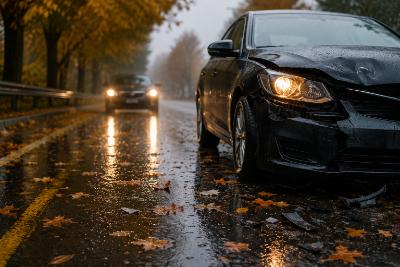
Rain changes how a vehicle interacts with the roadway. Water on pavement can reduce traction and make braking, steering, and turning more difficult. Heavy rain can also reduce how far you can see ahead.
Fall conditions can add other hazards. Wet leaves and roadway debris may collect near curves, intersections, shoulders, and drainage areas. Water can also pool in low spots or worn sections of pavement. A driver who continues at the same speed and following distance used on a dry road may have less time and less traction available when traffic slows or another hazard appears.
Stopping distance can also become a concern. If a driver follows too closely, wet pavement may leave too little room to stop safely when traffic ahead slows suddenly.
Visibility can change quickly during a storm. Rain on the windshield, spray from surrounding vehicles, low light, and reflected headlights can make brake lights, lane markings, pedestrians, traffic signals, and nearby vehicles harder to see.
These risks can be serious in Atlanta traffic, where congestion and frequent lane changes may require drivers to react quickly.



Drivers Still Have Responsibilities When It Rains
Rain does not automatically make a collision unavoidable.
Georgia drivers must use reasonable care based on the conditions they encounter. O.C.G.A. § 40-6-180 states that a person may not drive faster than is reasonable and prudent under existing conditions and hazards, including hazards caused by weather or highway conditions.
A posted speed limit does not mean that the posted speed is safe in every situation. When rain reduces visibility or water collects on the roadway, a driver may need to slow down, increase following distance, avoid abrupt movements, and take other reasonable precautions.
After a wet-road collision, questions may include:
- Was the driver traveling too fast for the weather and road conditions?
• Did the driver leave enough space to stop safely?
• Did the driver make an unsafe or sudden lane change?
• Did the driver lose control after entering standing water?
• Was the driver distracted?
• Were the tires or other safety components in poor condition?
• Did the driver continue at an unsafe speed as visibility worsened?
These facts can help show whether negligent driving contributed to the collision.
Wet weather can explain the road conditions, but it does not automatically excuse unsafe driving.
I had the pleasure of working against Chris on a fairly complicated case. Chris was professional during the course of litigation, and undoubtedly maintained his clients’ interests as the primary focus throughout. Due to Chris’ efficiency and advocacy for his clients, we were able to resolve the case for a reasonable amount, without spending unnecessary time and expenses. I hope to have more cases with Chris in the future, and would have no hesitation recommending Chris to handle complex personal injury matters.” - Paul T.
Common Car Accidents During Fall Rain
Rain can contribute to several types of car accidents in Georgia.
Rear-end collisions are one example. Wet pavement can reduce available traction and make it harder to stop within the same distance available on a dry roadway. A driver who follows too closely may strike the vehicle ahead when traffic slows.
Hydroplaning can also cause a driver to lose control. Hydroplaning occurs when water separates the tires from sufficient contact with the road surface. Steering and braking response may become limited until the tires regain contact.
Other wet-road crashes may include:
- Lane-departure accidents
• Intersection collisions
• Sideswipe crashes
• Curve-related accidents
• Multi-vehicle collisions
A driver who loses control on a curve may cross into another lane. A driver approaching an intersection too quickly may be unable to stop in time. On a congested Atlanta roadway, one collision can also lead to additional impacts involving several vehicles.
Learn more about car accident claims in Atlanta, Georgia:
https://gunnelslaw.com/atlanta-car-accident-lawyer/
Dealing with Insurance Steps to File a LawsuitRelated Videos
Why Insurance Companies May Dispute Wet-Road Claims
Wet-weather accidents can create disputes because an insurance company may argue that the weather, standing water, or another road condition caused the collision rather than the insured driver’s conduct.
That argument does not always resolve liability. The investigation may focus on what each driver did before the crash.
Questions may include whether the driver reduced speed, increased following distance, used reasonable care during poor visibility, reacted appropriately to standing water, or continued driving aggressively after conditions worsened.
The insurance company may also argue that you contributed to the collision.
Georgia uses a modified comparative negligence rule under O.C.G.A. § 51-12-33. If you are found partly responsible, your damages may be reduced according to your percentage of fault. If you are 50 percent or more at fault, you generally cannot recover damages from another party under that rule.
Because percentages of fault can directly affect compensation, evidence about the moments before and during the crash can matter.
Evidence Can Disappear Quickly After a Rain Accident
Wet-road evidence can change quickly after a collision.
Standing water may drain. Rain may move debris. Wet leaves may shift. Vehicles may be moved or towed. Traffic patterns can return to normal. The appearance of the road may be different by the time an investigator visits later.
If you can do so safely, photographs and video may help preserve what the scene looked like at the time of the crash.
Useful photographs may show:
- Vehicle positions and damage
• Standing water
• Wet leaves or roadway debris
• Traffic signals and signs
• Lane markings
• Nearby intersections
• Road curves or slopes
• Visibility conditions
• Guardrails or damaged property
Witness information may also help. A witness who saw a vehicle speeding, following too closely, changing lanes abruptly, or losing control may provide useful details.
Police reports, dashcam footage, nearby surveillance recordings, vehicle data, phone records when legally obtainable, repair records, and other evidence may also become relevant.
Learn more about preserving evidence after a collision:
https://gunnelslaw.com/collecting-evidence-in-a-car-accident-claim/
Medical Documentation Matters After a Wet-Road Crash
A rainy-weather collision can cause injuries even when the damage does not initially appear severe.
Possible injuries may include:
- Neck and back injuries
• Concussions
• Shoulder injuries
• Fractures
• Soft-tissue injuries
• Other accident-related trauma
Some injury symptoms may not become apparent immediately after a crash. Seeking appropriate medical care can protect your health and create records showing when symptoms were reported, what conditions were diagnosed, and what treatment was recommended.
Medical documentation may become part of an insurance company’s evaluation of whether an injury was caused by the crash and how the injury affected your life.
Gaps in treatment or incomplete records may lead to disputes. An insurer may argue that an injury was unrelated to the collision, that another event caused the condition, or that the injury was less serious than claimed.
Learn more about medical documentation in Georgia car accident claims:
https://gunnelslaw.com/the-importance-of-medical-documentation-in-a-georgia-car-accident-claim/
What Compensation May Be Available After a Wet-Road Accident?
The compensation available after a Georgia car accident depends on the facts of the case, the available evidence, applicable insurance coverage, and the losses caused by the collision.
A claim may seek compensation for losses such as:
- Medical expenses
• Reasonably necessary future medical care
• Lost wages
• Reduced earning capacity
• Pain and suffering
• Property damage
• Other accident-related losses that can be supported by the facts and Georgia law
There is no standard value for a wet-road car accident claim.
The value of a claim can depend on the severity and duration of the injuries, medical treatment, evidence of fault, insurance coverage, lost income, future medical needs, and the effect the injuries have on your work and daily life.
An insurance company may make a settlement offer before your medical treatment is complete. A settlement usually requires you to release covered claims against the settling party, so you should understand the injuries, losses, available coverage, and terms of the release before making a final decision.
What to Do After a Fall Rain Car Accident
Your safety and health come first after a collision.
Depending on the circumstances, useful steps may include:
- Move away from immediate traffic hazards when you can do so safely.
• Call 911 when emergency assistance is needed.
• Report the collision to law enforcement when required or appropriate.
• Seek medical attention for injuries and symptoms.
• Photograph the vehicles, roadway, standing water, debris, traffic controls, and surrounding area when it is safe.
• Collect contact information from witnesses.
• Preserve dashcam footage or other recordings.
• Keep medical bills, treatment records, repair estimates, insurance correspondence, wage records, photographs, and other accident documents.
• Avoid altering or discarding evidence that may relate to the crash.
The firm’s guide on steps to take after a Georgia car accident provides more information:
https://gunnelslaw.com/what-should-i-do-immediately-after-a-car-accident-in-georgia/
Be Careful When Discussing the Accident With Insurance Companies
An insurance adjuster may contact you soon after the collision.
Statements about speed, visibility, injuries, road conditions, or the events before the crash can become part of the insurer’s claim evaluation. If you do not know an answer, avoid guessing. You should also avoid minimizing an injury before you understand its nature and extent.
A wet roadway can make a claim more disputed when drivers, witnesses, and insurers disagree about how the collision occurred or who had enough time to react.
Read more about communications with insurance companies after an injury:
https://gunnelslaw.com/dealing-with-insurance-companies/
How a Car Accident Attorney Can Help
A wet-road accident may require a detailed investigation rather than an assumption that rain alone caused the crash.
A car accident attorney can review available evidence, including:
- Police reports
• Photographs and videos
• Witness statements
• Medical records
• Vehicle damage
• Insurance policies
• Available electronic or vehicle data
• Roadway conditions
• The actions of each driver before the collision
Legal representation can also help you address comparative-fault arguments, document accident-related losses, evaluate insurance coverage, assess settlement terms, and determine whether filing a lawsuit is appropriate.
Not every rainy-weather collision creates a valid personal injury claim. The legal question is whether another person or entity failed to use the care required under the circumstances and whether that conduct caused compensable harm.
Talk With an Atlanta Car Accident Attorney About a Wet-Road Crash
If you were injured in a wet-road car accident in Atlanta, Georgia, you may have questions about fault, medical bills, insurance coverage, evidence, and the steps available to you.
Gunnels Law Firm, LLC represents people injured in Georgia accidents. The firm can review the circumstances of your collision, discuss available evidence, and explain legal options that may apply to your situation.
Call (770) 766-4484 or visit:
https://gunnelslaw.com/contact-us/
This article is for informational purposes only and is not legal advice. Speak with an attorney about your specific circumstances.