
Back-to-school traffic can place newly licensed drivers in crowded school zones, busy intersections, carpool lines, and changing traffic patterns across Atlanta, Georgia. If your teenager is involved in a crash, focus first on safety and medical care. You should also preserve evidence, report the collision, review every available insurance policy, and avoid guessing about fault.
Georgia licensing restrictions, insurance terms, and the facts of the collision can all affect a claim. A violation of a teen licensing rule may become evidence, but it does not automatically decide fault or eliminate insurance coverage. Early legal guidance can help you protect your child’s health, your family’s rights, and the records needed to support a claim.
Learn about Atlanta car accident claims:
https://gunnelslaw.com/atlanta-car-accident-lawyer/




Why Back-to-School Traffic Raises Teen Driving Risks 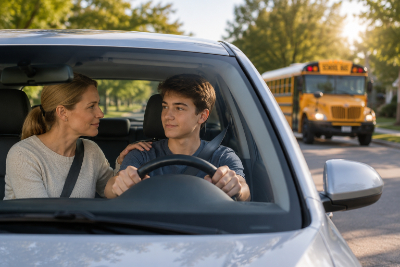
Back-to-school traffic creates more conflict points for teen drivers. Your teenager may be using a new route, driving at a different time, transporting siblings, attending practices, or entering a crowded parking area for the first time.
Common back-to-school driving risks include:
- Congestion near schools, neighborhood entrances, and carpool lanes
- Sudden stops by school buses, parents, and other drivers
- Students crossing near intersections, driveways, and parking areas
- Drivers rushing because they are late
- Conversations, music, and activity from teen passengers
- Mobile phone use behind the wheel
- Reduced visibility during early morning travel
- Lane changes caused by construction or temporary traffic controls
- Rain that reduces traction and visibility
A newly licensed driver may need more time to identify a hazard, judge the speed of an approaching vehicle, select a safe following distance, or decide when to turn across traffic. You can lower the risk by practicing the school route before classes begin and reviewing the difficult parts of the trip together.



Georgia Teen Driver Licensing Rules
Georgia uses a graduated licensing system under the Teenage and Adult Driver Responsibility Act. A Class D provisional license is the second stage of that system for drivers younger than 18.
A Class D driver:
- May not drive between 12:00 midnight and 5:00 a.m.
- May carry only immediate family members during the first six months after the license is issued
- May carry only one passenger younger than 21 who is not an immediate family member during the second six months
- May carry no more than three passengers younger than 21 who are not immediate family members after the first year
You can review the current Georgia Department of Driver Services requirements here:
https://dds.georgia.gov/teen-driving-laws-faqs
These restrictions can matter after a crash because police officers and insurers may investigate who was in the vehicle, where the teenager was going, and when the trip occurred.
A licensing violation does not automatically decide who caused the crash. The physical evidence, witness accounts, traffic laws, and actions of every driver still matter.
You may also set household rules that are stricter than Georgia’s minimum requirements. A written parent-teen driving agreement can address passengers, curfews, mobile phones, seat belts, weather, and the conditions under which your teenager may use the vehicle.
Common Causes of Teen Driver Crashes
A teen driver collision can involve several forms of negligence. Your teenager may make a driving error, another motorist may cause the crash, or several parties may share responsibility.
Distracted Driving
Mobile phones, navigation applications, food, music controls, and passengers can pull a teen driver’s attention away from traffic. Georgia’s Hands-Free Law generally prohibits drivers from holding or supporting a wireless device while operating a vehicle. It also restricts texting and several other device-related activities.
You can review Georgia’s current hands-free guidance here:
https://dds.georgia.gov/chapter-2-traffic-laws-safe-driving
Hands-free use may comply with the device law in some situations, but a conversation or application can still reduce a driver’s attention. Your household rule can require the phone to remain mounted, silenced, or stored during the trip.
I had the pleasure of working against Chris on a fairly complicated case. Chris was professional during the course of litigation, and undoubtedly maintained his clients’ interests as the primary focus throughout. Due to Chris’ efficiency and advocacy for his clients, we were able to resolve the case for a reasonable amount, without spending unnecessary time and expenses. I hope to have more cases with Chris in the future, and would have no hesitation recommending Chris to handle complex personal injury matters.” - Paul T.
Speeding or Driving Too Fast for Conditions
A posted speed limit does not make every speed safe. Rain, congestion, poor visibility, and stopped school traffic may require a lower speed. A teen driver who approaches a school zone too quickly may not have enough time to respond to a bus, pedestrian, bicycle, or stopped vehicle.
Following Too Closely
Rear-end crashes can occur when a driver leaves too little space or fails to expect frequent stops. Encourage your teenager to increase following distance in rain, heavy traffic, and areas with buses or carpool activity.
Passenger Distractions
Teen passengers can divide a new driver’s attention and influence decision-making. Georgia’s Class D passenger restrictions are designed to limit this risk while a driver gains experience.
Failure to Yield
A teen driver may misjudge the speed of approaching traffic while turning left, entering a main road, or leaving a school parking lot. Drivers must also watch for pedestrians, bicycles, and vehicles that have the right of way.
What You Should Do After Your Teen’s Accident
The steps you take after a teen driver accident can affect your child’s health and the strength of an insurance claim.
Dealing with Insurance Steps to File a LawsuitRelated Videos
1. Call 911 and Request Medical Help
Call 911 when anyone may be injured or when the vehicles create a roadway hazard. Some injuries may not be obvious at the scene. A medical professional can evaluate your teenager and document symptoms connected to the crash.
2. Gather Evidence When It Is Safe
Useful evidence may include:
- Photographs of every vehicle and the points of impact
- Wide photographs of the roadway, intersection, and traffic controls
- Images of debris, skid marks, damaged barriers, and visible injuries
- Weather, lighting, and road conditions
- Driver, owner, and insurance information
- Witness names and telephone numbers
- School bus, delivery vehicle, or commercial vehicle details
- Locations of nearby homes, businesses, buses, or cameras that may have video
- Your teenager’s route, destination, and passenger information
Your teenager should cooperate with law enforcement and answer truthfully. Your teenager should not guess, speculate, or accept blame without knowing all of the facts.
Learn more about preserving crash evidence:
https://gunnelslaw.com/collecting-evidence-in-a-car-accident-claim/
3. Arrange Follow-Up Medical Care
Follow the treatment plan and keep every medical record, bill, referral, prescription, and discharge instruction. Also keep records of school absences, missed activities, transportation costs, and changes in your child’s daily routine.
4. Report the Crash to the Insurer
Review the policy and report the collision within the required time. Give accurate basic information. Before providing a recorded statement, review your policy obligations and consider legal advice. Your duties to your own insurer may differ from your duties to another driver’s insurer.
5. Preserve Digital and Vehicle Evidence
Do not delete relevant text messages, location history, photographs, dash camera footage, or vehicle application data. A lawyer may also need to request event data, surveillance video, or mobile phone records before they are overwritten or lost.
How Insurance Coverage May Apply
Insurance coverage after a teen driver accident may depend on the vehicle, the policy, the household, the listed drivers, permission to use the vehicle, and the facts of the trip.
Possible sources of coverage may include:
- Liability coverage carried by the at-fault driver
- Uninsured motorist coverage
- Underinsured motorist coverage
- Medical payments coverage
- Coverage under a household automobile policy
- Commercial automobile coverage when a work vehicle is involved
You should notify your insurer when a licensed teenager begins driving and provide accurate information requested during underwriting. After a crash, an insurer may examine whether the teenager had permission to use the vehicle, whether the driver was listed as required, and whether any policy exclusion applies.
A Class D restriction violation does not automatically answer every coverage question. Policy language, Georgia law, and the circumstances of the crash must be reviewed together.
Learn more about uninsured motorist coverage:
https://gunnelslaw.com/uninsured-motorist-coverage/
Who May Be Responsible for a Teen Driver Accident?
Responsibility depends on who acted carelessly and whether another person or company is legally accountable for that conduct.
Potentially responsible parties may include:
- A negligent teen or adult driver
- The owner of a vehicle
- An employer whose worker caused the collision while acting within the scope of employment
- A company that negligently hired, retained, or supervised a driver
- A manufacturer responsible for a defective vehicle or component
- A government entity responsible for a dangerous roadway condition, subject to special notice and immunity rules
Georgia’s family purpose doctrine may create liability for a vehicle owner in some cases when a family member uses a vehicle provided for family use with permission. A separate negligent entrustment claim may arise when an owner knowingly allows an unsafe or unqualified driver to use a vehicle.
You are not automatically liable for every crash involving your teenager. Ownership, control, permission, household relationships, the purpose of the trip, and your knowledge of the driver’s fitness can affect the analysis.
What Compensation May Be Available?
A claim may seek compensation for losses caused by the crash. The available damages depend on the injuries, medical evidence, insurance coverage, fault, and long-term effects on your teenager.
Recoverable losses may include:
- Emergency medical treatment
- Hospital and physician expenses
- Physical therapy and rehabilitation
- Prescription medications
- Future medical care
- Lost income from part-time or seasonal work
- Reduced future earning capacity
- Pain and suffering
- Emotional distress
- Permanent impairment or disfigurement
- Property damage
- Other documented accident-related expenses
A teenager may have little employment history, but a serious injury can affect school, sports, social activities, independence, and future work. Keep records that show those changes. A calendar or journal can document symptoms, appointments, missed events, and activities your teenager can no longer perform.
Georgia’s Comparative Negligence Rule
Georgia follows a modified comparative negligence rule. An injured person may recover damages when that person is less than 50 percent responsible for the injury. The recovery is reduced by the percentage of fault assigned. A person who is 50 percent or more at fault generally cannot recover damages from the other party.
For example, a person with $100,000 in proven damages who is found 20 percent at fault may have the award reduced to $80,000.
An insurer may argue that a teen driver was speeding, distracted, following too closely, or failing to yield. Those claims should be tested against photographs, witness statements, video, vehicle data, phone records obtained through lawful procedures, and the traffic rules that applied.
How a Car Accident Lawyer Can Help Your Family
A car accident lawyer can investigate the collision, identify insurance coverage, preserve evidence, and evaluate the full effect of the injuries.
Legal work may include:
- Obtaining police and crash reports
- Interviewing witnesses
- Requesting surveillance and traffic camera footage
- Preserving mobile phone, vehicle, and event data
- Reviewing insurance policies and coverage positions
- Collecting medical, school, and employment records
- Working with medical or accident reconstruction professionals
- Identifying every potentially responsible party
- Communicating with insurance adjusters
- Negotiating a settlement
- Filing a lawsuit when litigation is necessary
Before signing a release or accepting a settlement, make sure you understand which claims are being resolved and whether your teenager may need future care. Claims involving minors can also raise settlement and court-approval issues that require careful handling.
How You Can Reduce Back-to-School Driving Risks
You can help your teenager build safer habits by setting clear rules and practicing the situations that create the most stress.
Consider these steps:
- Drive the school route together before the first day
- Identify difficult turns, construction zones, bus stops, and pedestrian crossings
- Set a departure time that reduces pressure to rush
- Require every occupant to use a seat belt
- Limit passengers beyond the minimum legal restrictions when your teenager needs more practice
- Require the phone to remain mounted, silenced, or stored
- Review what to do after a crash or vehicle breakdown
- Create a plan for rain, fatigue, unfamiliar routes, and late activities
- Tell your teenager to call you when a situation feels unsafe
A supportive rule can be simple: your teenager may call you for help without fear of an immediate argument. That option can prevent an unsafe decision involving fatigue, passengers, weather, or pressure to drive.
Frequently Asked Questions About Teen Driver Accidents
Does a Class D licensing violation prove that my teenager caused the crash?
No. A licensing violation may be evidence about the circumstances, but fault depends on how the collision occurred and whether each driver followed the applicable traffic laws.
Can I be held responsible for a crash caused by my teenager?
Possibly. Georgia’s family purpose doctrine, vehicle ownership, permission, agency, and negligent entrustment may affect parental or owner liability. The result depends on the facts.
What happens if my teenager was partly at fault?
Your teenager may still have a claim if the assigned fault is less than 50 percent. Any recovery may be reduced by the percentage of fault.
Should my teenager give a recorded insurance statement?
Review the policy and obtain legal advice before a recorded statement. Your family may have cooperation duties under its own policy, while another driver’s insurer represents interests that may conflict with your claim.
Speak With an Atlanta Car Accident Lawyer
If your teenager was injured in a motor vehicle accident in Atlanta or a nearby Georgia community, prompt action can help preserve evidence and clarify the available insurance coverage.
Christopher D. Gunnels spent the first 10 years of his legal career representing individuals, businesses, and insurance companies before focusing his practice on injured people. Gunnels Law Firm, LLC can review the crash, explain the options available to your family, and pursue compensation supported by the evidence.
Learn more about Christopher D. Gunnels:
https://gunnelslaw.com/attorney-christopher-d-gunnels/
Call (770) 766-4484 to request a confidential consultation.
Contact the firm:
https://gunnelslaw.com/contact-us/
This article is provided for general informational purposes and does not constitute legal advice. Reading this article does not create an attorney-client relationship. Every case depends on its specific facts and applicable law.